

If your acne has disappeared but dark spots remain, you are not alone. For many people with Asian skin, acne marks can remain visible for months after the original pimple has healed.
These persistent marks are often a type of post-inflammatory hyperpigmentation (PIH). PIH occurs when inflammation from acne triggers increased melanin production or causes pigment to become deposited deeper within the skin. It is particularly common in people with more pigmented skin, including many Asian skin types.
But why can acne marks seem to last so long? And what can you do to prevent them from becoming darker or more stubborn?
What Are Acne Marks?
The term “acne marks” can refer to several different things.
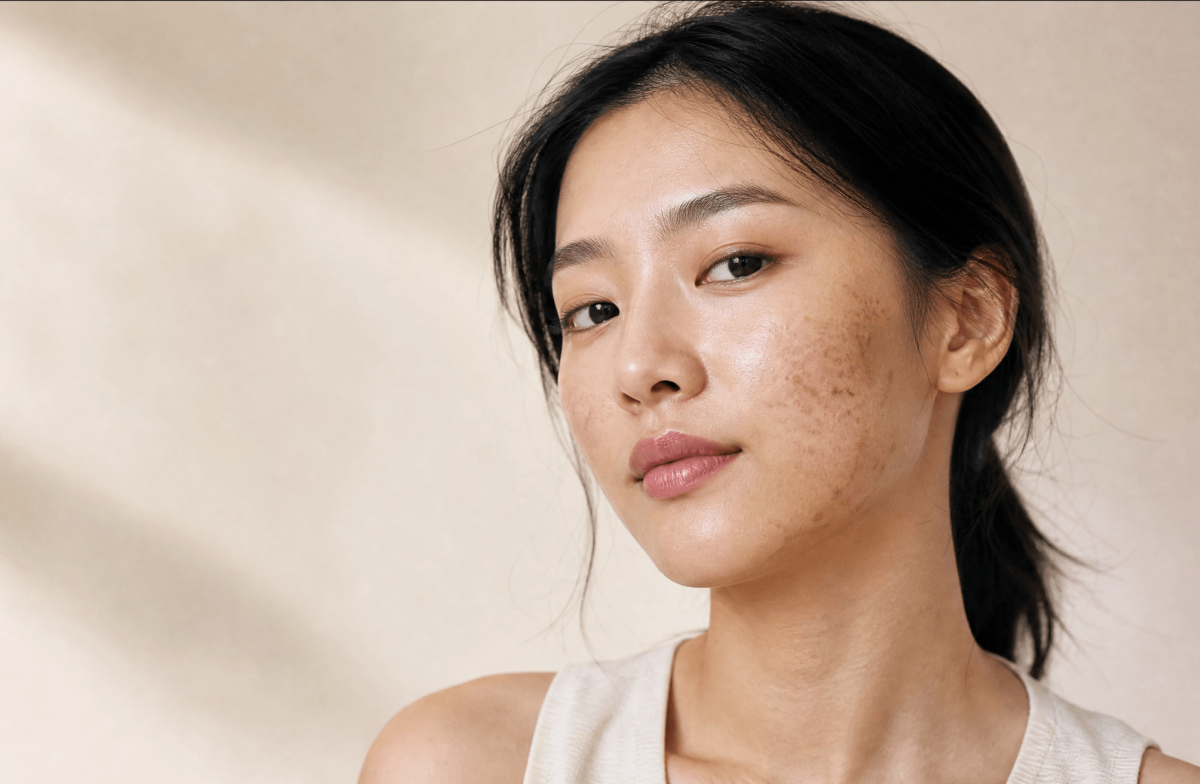
Dark brown, greyish or brownish spots left behind after a pimple has healed are commonly associated with post-inflammatory hyperpigmentation. They are different from acne scars, which involve a change in the texture or structure of the skin.
This distinction matters because PIH is primarily a pigmentation concern, while acne scars may require different treatment approaches.
Research shows that acne is one of the major triggers of PIH in skin of colour. A review focusing specifically on Asian skin also identifies acne-induced PIH as a common concern.
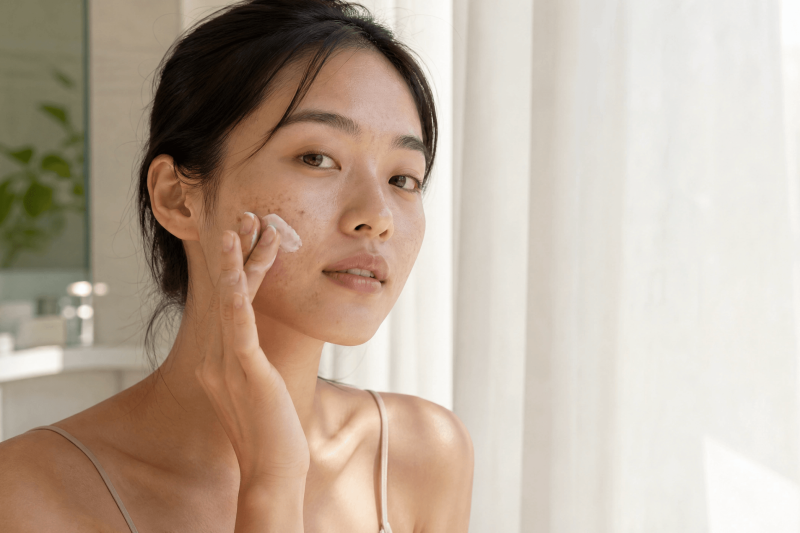
Why Does Asian Skin Develop Persistent Acne Marks?
1. More active pigment response to inflammation
Melanin is the pigment responsible for much of our skin colour. When the skin becomes inflamed, such as during an acne breakout, inflammatory signals can stimulate pigment production.
In skin with more melanin, this inflammatory response can result in more noticeable pigmentation after the acne itself has healed.
Importantly, this does not mean that every Asian person will experience persistent acne marks. Asian skin encompasses a wide range of skin tones and types. The likelihood and severity of PIH are influenced by factors such as individual skin pigmentation, acne severity and the amount of inflammation.
2. Acne inflammation can trigger more pigmentation
The deeper and more inflamed the acne lesion, the greater the potential for pigmentation afterwards.
For example, a small whitehead may disappear with little or no visible mark, while an inflamed cyst or pimple that has been repeatedly touched may leave a darker spot behind.
This is one reason why controlling acne early can also help prevent future acne marks. Research on skin of colour highlights effective acne management as an important part of reducing acne-associated hyperpigmentation.
3. Picking and squeezing can make marks worse
It can be tempting to squeeze a pimple when it appears, particularly when there is a visible blackhead or whitehead.
However, unnecessary physical trauma can increase inflammation and potentially worsen pigmentation. Skin trauma itself can also trigger PIH.
If you regularly squeeze, scratch or aggressively extract acne at home, you may be extending the inflammatory process and increasing the likelihood of a lingering mark.
4. Sun exposure can keep pigmentation noticeable
UV exposure is another important factor when managing hyperpigmentation.
Even after the acne has healed, exposure to sunlight can make existing pigmentation more noticeable. This is why daily sun protection is an important part of managing acne marks.
A 2025 systematic review focusing specifically on Asian patients found sunscreen to be the most consistently successful preventative measure among the interventions studied for PIH.
For Singapore's sunny climate, daily broad-spectrum sunscreen is particularly important—even when you are not spending the entire day outdoors.
How Long Do Acne Marks Take to Fade?
There is no single timeline because every person's skin responds differently.
Some superficial acne marks may gradually fade over several months, while deeper pigmentation can take considerably longer. A recent systematic review of PIH in skin of colour reported an average duration of approximately 21 months among the cases included in the studies, although this should not be interpreted as a prediction for every individual.
The good news is that acne marks can often improve with the right combination of prevention, skincare and professional treatment.
How Can You Prevent Acne Marks From Getting Worse?
The first step is to control the acne itself. Continuing breakouts mean repeated inflammation, which can create new pigmentation while older marks are still fading.
A consistent routine can include:
- A gentle cleanser suitable for your skin type
- Non-comedogenic moisturiser
- Daily broad-spectrum sunscreen
- Appropriate acne treatments
- Avoiding unnecessary picking and squeezing
- Professional skin assessment when acne or pigmentation is persistent
Ingredients such as retinoids, azelaic acid, niacinamide and other pigment-targeting ingredients may be considered depending on your skin condition and tolerance. However, irritation can also worsen pigmentation, so stronger does not always mean better.
Can Professional Facials Help With Acne Marks?
Professional treatments may complement a good home skincare routine, particularly when acne, congestion and pigmentation occur together.
However, treatment should be customised according to your skin type, acne activity and pigmentation. Procedures that cause excessive irritation or inflammation may potentially aggravate PIH in susceptible skin. This is particularly important for Asian and other skin-of-colour patients.
If you have active acne together with persistent dark marks, a professional skin assessment can help determine whether you are dealing with PIH, acne scarring, or another pigmentation concern.
Conclusion
Acne may disappear quickly, but the pigmentation it leaves behind can take much longer to fade, especially in skin types that are more prone to post-inflammatory hyperpigmentation.
For Asian skin, the key is not simply trying to “remove” dark spots as quickly as possible. Preventing repeated inflammation, protecting the skin from UV exposure, avoiding unnecessary irritation and choosing treatments appropriate for your skin type are all important.
If your acne marks have been lingering for months, don't assume they will disappear overnight. With consistent care and an appropriate treatment plan, their appearance can gradually improve.
Frequently Asked Questions (FAQs)
1. Why do acne marks last longer on Asian skin?
Asian skin can be more prone to post-inflammatory hyperpigmentation, where acne inflammation triggers increased melanin production or pigment deposition. This can make dark marks more noticeable and persistent.
2. How long do acne marks take to fade on Asian skin?
It varies considerably. Some superficial marks may fade within several months, while deeper pigmentation can persist much longer. Studies of PIH in skin of colour have reported prolonged durations, so consistent prevention and treatment are important.
3. Are acne marks the same as acne scars?
No. Acne marks are generally changes in skin colour, such as brown or dark spots, while acne scars involve changes in skin texture or structure. They require different approaches.
4. Does sunscreen help acne marks fade?
Sunscreen can help prevent pigmentation from becoming darker and is an important part of PIH prevention. Evidence from a systematic review of Asian patients found sunscreen to be the most consistently successful preventative measure studied.
5. Does picking pimples cause dark marks?
Picking and squeezing can increase inflammation and trauma, potentially increasing the risk of post-inflammatory pigmentation. Avoiding unnecessary manipulation is particularly important if your skin is prone to dark marks.
6. What ingredients can help with acne pigmentation?
Depending on your skin and the underlying acne, ingredients such as retinoids, azelaic acid and niacinamide may be useful. However, excessive irritation can potentially worsen pigmentation, so products should be introduced appropriately.
7. Can a facial help with acne marks?
A professionally customised facial may complement an acne and skincare routine, particularly when congestion and active acne are also present. However, treatment should be selected carefully because excessive irritation may aggravate pigmentation in susceptible skin.