

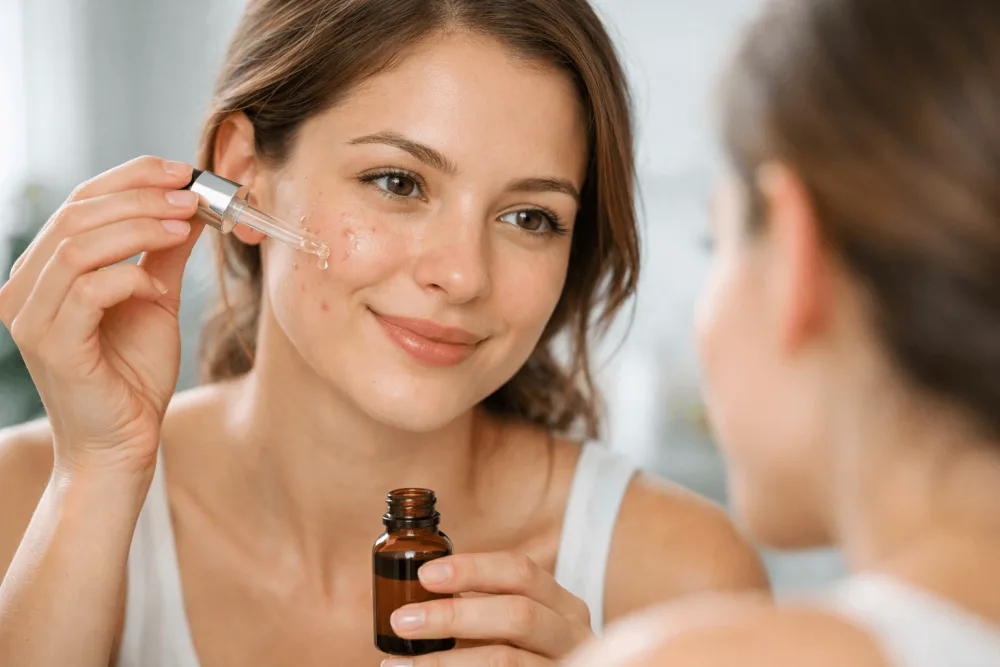
Do PDRN serums work? A PDRN serum can be a pleasant, hydrating part of your routine, but it is not the same as a PDRN skin booster. PDRN molecules are large, and research suggests they are unlikely to pass through intact skin in meaningful amounts on their own, so most of what you notice from a serum likely comes from its supporting ingredients. Clinic skin boosters place PDRN deeper in the skin with needles, which is why they are doctor-administered medical treatments in Singapore.
"Salmon DNA" skincare is everywhere right now, from K-beauty shelves in Singapore to your social media feed. If you are wondering whether a PDRN serum is worth buying, how it compares with an injectable skin booster, or whether there is a gentle middle ground, this guide breaks it down plainly.
What Is PDRN?
PDRN (polydeoxyribonucleotide) is a mix of purified DNA fragments, most often taken from salmon or trout. It was first studied in medicine for wound and tissue repair. A review in Frontiers in Pharmacology (Squadrito et al., 2017) describes how PDRN acts on adenosine A2A receptors, a pathway linked to tissue repair, new blood vessel formation and reduced inflammation.
In aesthetics, PDRN and the closely related polynucleotides (PN) are best known as the active ingredient in skin boosters such as Rejuran. In the last two years, the ingredient has moved into serums, ampoules, sheet masks and creams, often marketed as "salmon DNA" skincare.
Why Is Everyone Talking About PDRN Serums?
Social media has driven much of the interest. A September 2026 social trends report from Syncly found that PDRN content on TikTok and Instagram focuses heavily on product reveals and benefit claims, while very few videos explain how a serum differs from a clinic treatment. That gap is where a lot of confusion begins.
The appeal is easy to understand: many people want the "glass skin" glow associated with skin boosters, without needles, cost or downtime. The honest question is how much of that a bottle can deliver.
Can PDRN Serums Actually Penetrate Your Skin?
This is the key issue. Your skin barrier is designed to keep large molecules out. As a general rule, molecules larger than about 500 daltons struggle to pass through intact skin. PDRN fragments are far larger than that, which is why Dermatology Times notes that topical PDRN is unlikely to penetrate intact skin through passive absorption and that most of it likely stays on the surface.
That does not make PDRN serums useless. A few points are worth knowing:
- Supporting ingredients do real work. Many PDRN serums also contain hyaluronic acid, glycerin, niacinamide or panthenol, which can improve hydration and the look of smoothness.
- Formulation matters. Some newer products use low-molecular-weight or specially processed PDRN, and early small studies are promising, but the evidence is still limited.
- Expectations matter most. Think of a PDRN serum as a hydrating, comforting step, not a needle-free version of a skin booster.
Key takeaway: a PDRN serum may help your skin look more hydrated and comfortable, but it is not designed to deliver the same results as an injected skin booster.
PDRN Serum vs Skin Booster vs PDRN Facial: What's the Difference?
It helps to think of PDRN products in three tiers, based on how deeply the ingredient is delivered.
- PDRN serums and masks (at home): applied to the skin surface. Gentle, affordable and easy to add to a routine. Benefits are mainly surface hydration and comfort.
- PDRN facials (medispa): professional, non-injectable treatments that combine cleansing, exfoliation and PDRN-based products with technology designed to help active ingredients reach beyond the surface, such as electroporation or microneedling. These are performed by trained estheticians.
- PDRN or polynucleotide skin boosters (clinic): injected directly into the skin with fine needles. In Singapore, these are medical procedures that should only be performed by a registered doctor, who will assess whether they are suitable for you.
Each tier has its place. The right choice depends on your skin concern, comfort with needles, budget and how much downtime you can accommodate.
Is PDRN Skincare Worth It in Singapore's Climate?
Singapore's year-round heat and humidity, often above 80% relative humidity, push many people towards lightweight textures. Most PDRN serums and ampoules are watery or gel-like, so they layer easily under sunscreen without feeling heavy. That makes them a comfortable choice for dehydrated skin that still feels oily, a very common combination here, especially for those spending long hours in air-conditioned offices.
A few practical tips if you are trying one:
- Patch test first, especially if you have sensitive or reactive skin.
- Apply to clean, slightly damp skin, then seal with a light moisturiser.
- Do not stack too many new actives at once; introduce one product at a time.
- Always finish with broad-spectrum sunscreen in the morning.
- Give any new product four to six weeks before judging it.
If you have persistent acne, rosacea, eczema or severe irritation, see a doctor or dermatologist before adding new actives.
Which Facial Suits Your Skin?
If you would like PDRN-based care that goes a step beyond a serum, without injections, a professional facial can be a sensible middle ground. At Caring Skin, our certified estheticians start with a skin analysis and personalise the treatment to your concern.
- Dull, dehydrated or tired-looking skin: the REJURAN DEP Glow treatment is needle-free and uses DermoElectroporation (DEP) to help deliver a REJURAN booster solution, followed by a c-PDRN mask. It is designed for dry and dehydrated skin that wants a plumper, more radiant look.
- Texture, enlarged pores or early fine lines: the K Booster treatment uses single-use sterile microneedling to help deliver a serum containing PDRN, hyaluronic acid and amino acids. It may suit early signs of ageing and uneven texture.
- Sensitive or easily irritated skin: start with barrier-calming care first. Our sensitive skin treatments focus on comfort before adding stronger actives.
Results vary from person to person, and a series of sessions with consistent home care usually matters more than any single treatment. For more background, read our earlier guides on PDRN's skin-loving benefits and whether Rejuran can help uneven skin tone.
Key Takeaways
- PDRN is a DNA-derived ingredient studied for tissue repair and widely used in skin boosters.
- PDRN serums are unlikely to penetrate deeply on their own; their hydrating co-ingredients do much of the visible work.
- Skin boosters deliver PDRN by injection and are doctor-administered medical treatments.
- PDRN facials offer a non-injectable middle ground using professional delivery technology.
- Choose based on your concern, comfort level and goals, and keep expectations realistic.
Not Sure Where to Start? Talk to a Skin Coach
If you are curious about PDRN but unsure whether a serum, a facial or a doctor's consultation is right for you, we are happy to help you think it through. Our estheticians can assess your skin, explain your options honestly and suggest a routine that fits your concerns and lifestyle. Book a consultation or trial session at any Caring Skin outlet in Singapore.
FAQs About PDRN Serums and Skin Boosters
1. What does PDRN do for the skin?
PDRN (polydeoxyribonucleotide) is a DNA-derived ingredient that has been studied for its role in tissue repair and reducing inflammation. When delivered into the skin, for example through skin boosters, it is associated with improved hydration, elasticity and skin quality. Topical PDRN products mainly offer surface hydration and comfort.
2. Is a PDRN serum as effective as a skin booster?
No. A PDRN serum is applied to the skin surface, while a skin booster injects PDRN or polynucleotides directly into the skin. Because PDRN molecules are large, topical serums are unlikely to reach the same depth. A serum can be a helpful hydrating step, but it should not be treated as a substitute for an injectable treatment.
3. Is PDRN really made from salmon sperm?
Most PDRN used in skincare and aesthetics is purified from salmon or trout DNA, often sourced from sperm cells. The DNA is highly purified and broken into fragments, so it does not contain fish proteins. Plant-derived and fermented PDRN alternatives are also becoming more common.
4. Who should not use PDRN products?
People with a known fish allergy, very reactive skin or active skin infections should be cautious and speak to a doctor first. Anyone who is pregnant, breastfeeding or managing a medical skin condition should also check with a doctor before trying new actives or treatments. Patch testing a new serum on a small area is always a good idea.
5. Can I get PDRN benefits without injections?
Yes, to a degree. Non-injectable PDRN facials combine professional cleansing and exfoliation with delivery technology such as electroporation or microneedling to help active ingredients reach beyond the surface. Results vary and are generally more subtle than injectable skin boosters, but there is little to no downtime.
6. Can I use a PDRN serum with retinol or vitamin C?
Generally, yes. PDRN is a gentle ingredient that pairs well with most routines, including retinoids and vitamin C. To reduce the risk of irritation, introduce one new product at a time and use retinoids at night with a good moisturiser and daily sunscreen.
7. How long does it take to see results from PDRN skincare?
Hydration from a PDRN serum may be noticeable within days, mainly thanks to its supporting ingredients. Changes in texture or radiance from professional facials usually build over a course of sessions. Results vary depending on your skin, routine and consistency.