


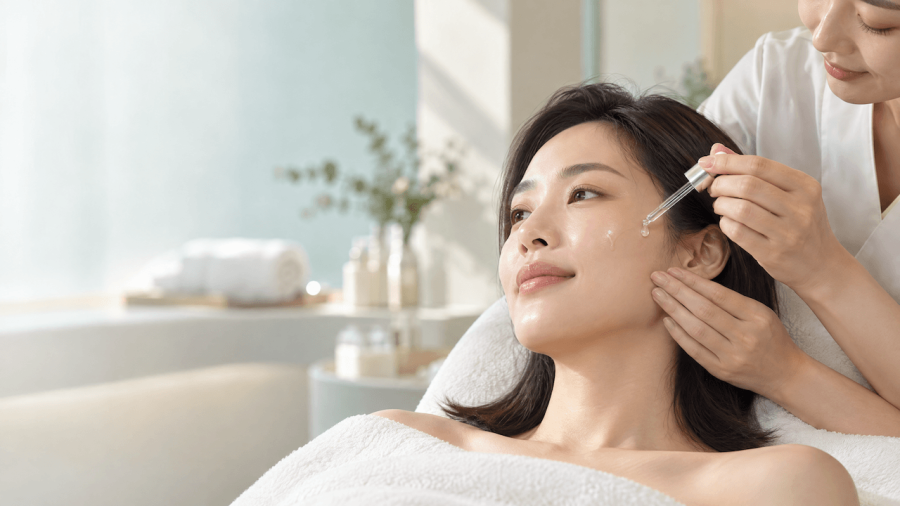
Yes, a hydration facial can be beneficial for dry and sensitive skin when the treatment is gentle, personalised and designed to support the skin barrier rather than aggressively exfoliate it. A suitable hydration facial can help replenish moisture, reduce feelings of tightness and leave dry or dehydrated skin feeling softer and more comfortable.
However, sensitive skin requires extra care. The products, techniques and active ingredients used during the facial should be selected according to your individual skin condition.
What Is a Hydration Facial?
A hydration facial is a facial treatment designed primarily to increase moisture levels in the skin and support a healthier skin barrier.
Unlike treatments that focus heavily on extraction, resurfacing or strong exfoliation, a hydration facial generally focuses on soothing and moisturising the skin.
Depending on the treatment, it may include:
- Gentle cleansing
- Mild exfoliation
- Hydrating serums or ampoules
- Moisturising masks
- Soothing ingredients
- Facial massage
- Barrier-supporting skincare
Ingredients commonly found in hydrating skincare may include hyaluronic acid, glycerin, ceramides and other humectants or moisturising ingredients that help the skin retain moisture.
Why Is Hydration Important for Dry and Sensitive Skin?
The outer layer of your skin acts as a protective barrier. When this barrier does not retain enough moisture, skin may feel dry, rough, tight or uncomfortable.
Sensitive skin can also react more easily to environmental conditions, skincare ingredients or overly aggressive treatments.
This is why hydration and skin-barrier support often go hand in hand.
A well-designed hydration facial aims to improve skin comfort without unnecessarily stressing the skin.
For people living in Singapore, skin can also be exposed to frequent transitions between hot, humid outdoor conditions and air-conditioned indoor environments. Spending long hours in air conditioning may contribute to the skin feeling dry or dehydrated, making an appropriate moisturising routine especially important.
What Are the Benefits of a Hydration Facial?
For suitable skin types, a hydration facial may provide several benefits.
1. Helps Replenish Skin Moisture
Hydrating treatments provide the skin with moisture-binding and moisturising ingredients that can help dry or dehydrated skin feel softer and more supple.
2. Supports the Skin Barrier
A compromised skin barrier can make skin more vulnerable to dryness and irritation.
Hydration facials that use gentle, barrier-supporting products can complement a skincare routine focused on maintaining healthy skin-barrier function.
3. Helps Reduce the Feeling of Tightness
One of the most common complaints associated with dry skin is tightness, particularly after cleansing.
Replenishing moisture can make the skin feel more comfortable.
4. Can Improve the Appearance of Dull Skin
Dehydrated skin can sometimes appear dull or lacklustre. Improving hydration may temporarily give the complexion a smoother and more refreshed appearance.
5. Can Be Adapted for Sensitive Skin
Not every facial needs to involve intensive exfoliation or extraction.
A hydration facial can often be customised with gentler techniques and soothing skincare, making it a potential option for people whose skin is easily irritated.
Is a Hydration Facial the Same as a Moisturising Facial?
The terms are often used interchangeably, although there can be subtle differences between treatments.
Hydration generally refers to increasing the skin's water content, while moisturising focuses on helping the skin retain that moisture and reducing water loss.
A comprehensive facial for dry skin may therefore combine both approaches — adding hydration while supporting the skin's protective barrier with moisturising ingredients.
What Should Sensitive Skin Avoid During a Facial?
Having sensitive skin does not automatically mean you should avoid facials altogether. However, stronger treatments may not be suitable for everyone.
Depending on your skin condition, you may want to be cautious about:
- Aggressive physical scrubs
- Strong chemical exfoliation
- Excessive extraction
- Very hot steam
- Heavily fragranced products
- Multiple strong active ingredients used together
Your facial therapist should first assess your skin and adjust the treatment accordingly.
If your skin is currently experiencing significant irritation, inflammation, broken skin or a flare-up of an existing skin condition, consider seeking advice from an appropriate healthcare professional before proceeding with cosmetic treatments.
How Often Should You Have a Hydration Facial?
There is no single facial frequency that suits everyone.
How often you need a hydration facial depends on factors such as:
- Your skin type
- Current skin condition
- Home skincare routine
- Lifestyle
- Environmental exposure
- Products being used
- Other facial or aesthetic treatments
Some people incorporate professional facials into a monthly skincare routine, while others may need them less frequently.
More treatments do not necessarily mean better results. The goal should be to develop a routine appropriate for your skin rather than following a fixed schedule.
Hydration Facial vs Hydrating Skincare at Home
A professional facial should complement — not replace — a consistent home skincare routine.
For dry and sensitive skin, your everyday routine is especially important.
A simple routine may include a gentle cleanser, hydrating serum where appropriate, moisturiser and daily sunscreen.
Professional hydration facials can provide additional targeted care and allow a trained therapist to assess how your skin is responding over time.
So, Is a Hydration Facial Good for Dry and Sensitive Skin?
A gentle hydration facial can be a good option for many people with dry and sensitive skin, particularly when the goal is to restore moisture, improve comfort and support the skin barrier.
The most important factor is not simply choosing a treatment labelled "hydrating."
The facial should be customised according to your skin's current condition, sensitivity and concerns. For sensitive skin in particular, a gentle, personalised approach is usually preferable to an aggressive one-size-fits-all facial.
If you frequently experience dryness, sensitivity or redness, start with a proper skin assessment so that the treatment and home skincare routine can be tailored to your individual needs.
| Hydration Facial Treatment | U.P (incl. GST) | TRIAL PRICE | PACKAGE PRICE |
| Collagen Veil Plus | $272.50 | $125+GST | From $988+GST for 4 sessions |
| CS-Hydra Mesotherapy | $368.42 | $169+GST | From $988+GST for 4 sessions |
| HydraLock Swiss Therapy | $324.82 | $98 Nett | From $988+GST for 4 sessions |
| REJURAN DEPGlow | $523.20 | $188 Nett (4ml) | |
| K Booster | $749.92 | $338 Nett |
Frequently Asked Questions
1. Is a hydration facial suitable for sensitive skin?
It can be. A hydration facial using gentle products and techniques may help moisturise and soothe sensitive skin. However, treatment should be customised according to the person's skin condition and known sensitivities.
2. Can a hydration facial help very dry skin?
A hydration facial can temporarily improve skin moisture and reduce feelings of dryness or tightness. For lasting improvement, it should be combined with an appropriate daily moisturising and skincare routine.
3. Can a hydration facial cause redness?
Some people may experience temporary redness after a facial, particularly if their skin is sensitive. Gentle techniques and suitable skincare products can help minimise unnecessary irritation.
4. What ingredients are good for hydrating dry skin?
Common hydrating and barrier-supporting skincare ingredients include hyaluronic acid, glycerin and ceramides. The ideal combination depends on your individual skin and product formulation.
5. How often should dry skin get a hydration facial?
There is no universal schedule. Frequency should depend on your skin condition, lifestyle, home skincare routine and professional assessment rather than following a fixed timetable.
6. Is hydration facial good for dehydrated skin?
A hydration-focused facial may be particularly useful when the skin lacks water and feels tight, dull or uncomfortable. It is also important to identify factors contributing to dehydration and maintain an appropriate skincare routine at home.
7. Can I have a hydration facial if I have acne and sensitive skin?
Possibly, but acne-prone sensitive skin requires careful product and treatment selection. A skin assessment should be carried out first, particularly if the acne is inflamed or you are using prescription or active acne treatments.